
Celestia Yacht
In this edition of Cultivating Conversations, we speak with Jasmine Chong, Co–Founder and Creative Director of Celestia Yacht.
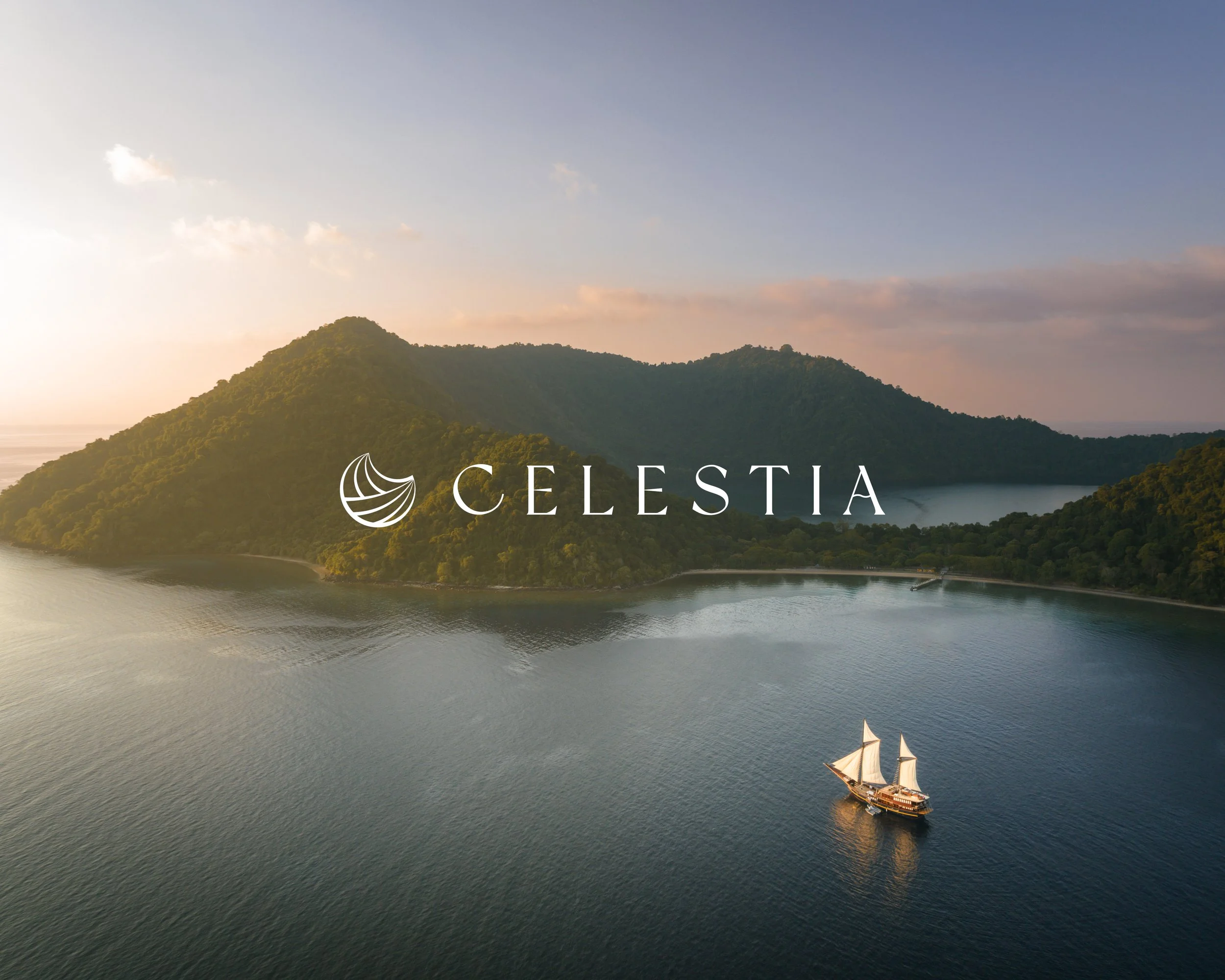
Based in New York and originally from Malaysia, Jasmine first built her career in fashion before turning her attention toward hospitality and life at sea. Created alongside her brother, Jason Tabalujan, during the pandemic, Celestia emerged from a desire to reconnect through travel, nature, and shared experience, eventually becoming a traditional Indonesian phinisi yacht exploring the remote landscapes of Komodo and Raja Ampat.
In our conversation, Jasmine reflects on designing spaces meant to be lived in rather than simply admired, the quiet intimacy that forms aboard Celestia, and the balance between craftsmanship, stewardship, and hospitality. From shaping the atmosphere on board to honoring Indonesia’s natural and cultural landscapes, she shares how feeling, place, and presence continue to guide her vision.
I’m a fashion designer based in New York, where I run my label, Jasmine Chong. Celestia began as a pandemic project between my brother and me, when we were separated between New York and Jakarta and dreaming about how to bring family together again.
“We started imagining what the ultimate family vacation might look like.”
Time at sea, beautiful landscapes, good food, and the feeling of being completely immersed in nature. That dream eventually became Celestia, a traditional Indonesian phinisi yacht.
From the beginning, I led the creative direction: shaping the brand, interiors, food program, and overall experience on board. In many ways it reflects the same things I care about in my fashion work: atmosphere, craftsmanship, and a strong sense of place.
What first drew you to the idea of creating a vessel that would explore Indonesia in such an intimate way?
“Indonesia has over 17,000 islands, and the best way to experience it is by sea.”
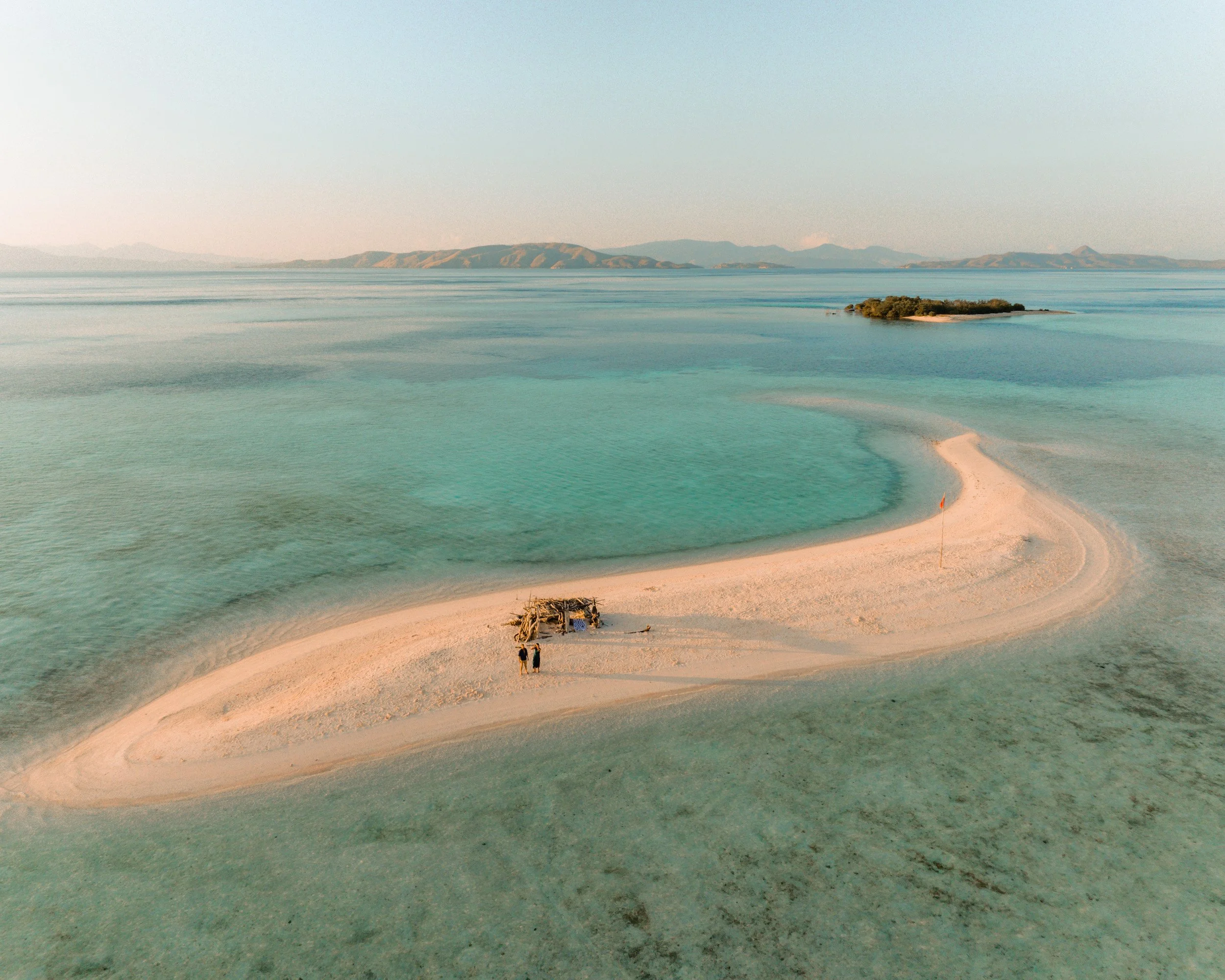
Many of the most extraordinary places — especially in Komodo and Raja Ampat are remote and only accessible by boat. Creating a traditional vessel like Celestia felt like the most natural way to explore the country in an intimate, immersive way, moving slowly through these incredible landscapes.
Celestia feels like a moving sanctuary rather than a ship. When you first imagined her, what were your guiding principles that shaped your vision?
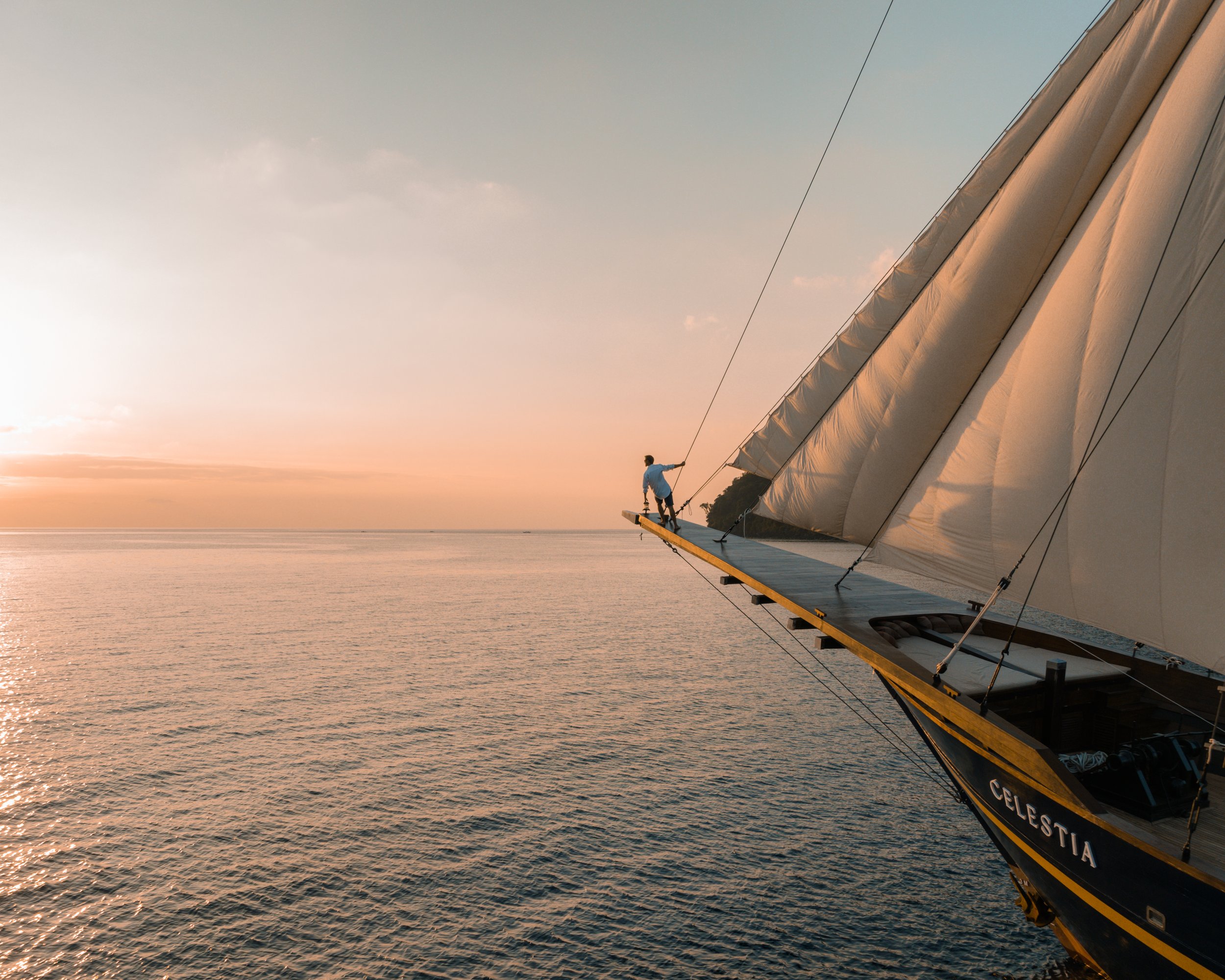
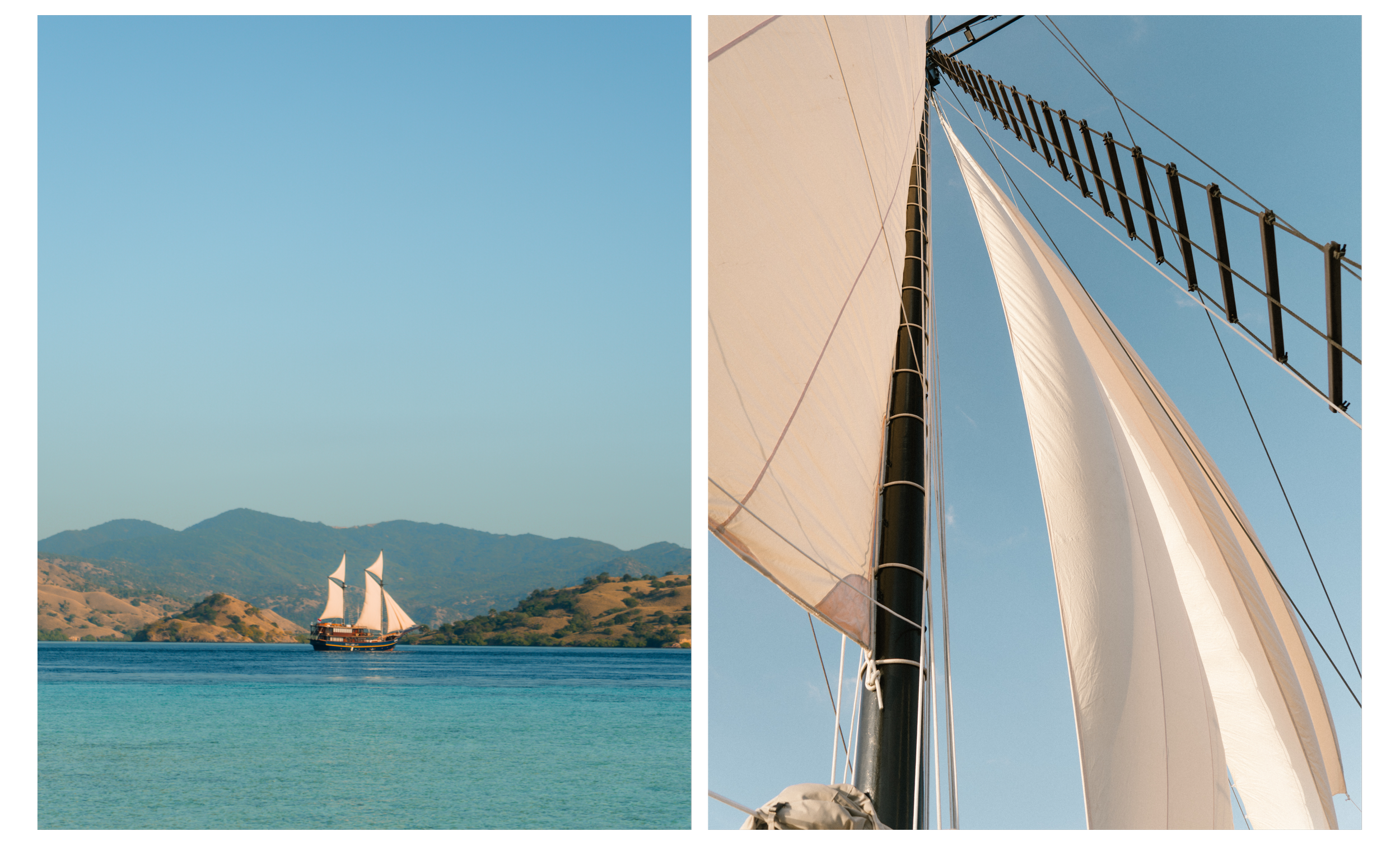
From the beginning, a strong sense of place guided the vision. Celestia was never meant to compete with the ocean, she is meant to feel like a part of it, moving gently through the landscape and complementing the natural surroundings rather than overpowering them.
“We also wanted to capture the warmth of Indonesian hospitality, Which feels very innate and generous.”
We worked to make that spirit central to the experience on board.
Was there a moment when you knew exactly what Celestia should be?
There was a moment during the peluncuran, the traditional boat launch, when the vessel was blessed before touching water. The boat builders and their families joined us on board, and they prepared a feast to celebrate. I remember children laughing and playing, people sharing food, and this beautiful sense of community.
“In that emotional moment it became very clear to me that Celestia would be a place for bringing people together.”
It would be the first of many moments of families gathering, dining, and celebrating at sea.
Every space on board feels intentional, yet unforced. How do you approach designing environments meant to be lived in, not just admired?
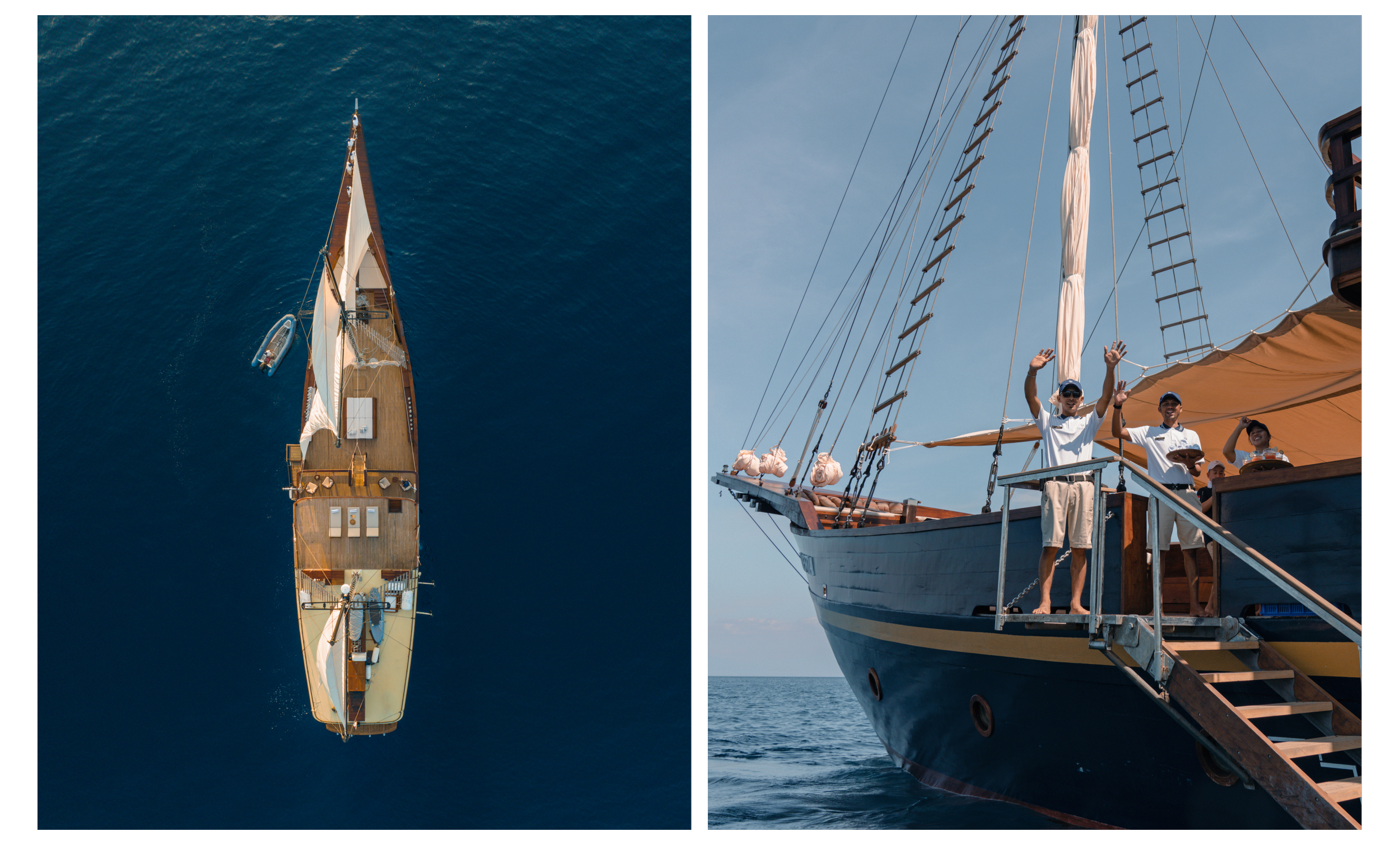
Designing a boat naturally requires a lot of intention because space is limited, so every area has to serve a purpose. I imagined my friends and family on a voyage, thinking about where the energy would gather and where quieter moments might unfold. The main deck is expansive and social, but there are also small nooks of privacy throughout the boat — places to read, rest, or have a quiet conversation. It’s a bit like designing for a gathering,
“you want spaces where things are lively, and others where people can retreat and slow down.”
Design–wise, we wanted subtle sophistication without too much preciousness or over the top glamour. Somewhere beautiful, but still relaxed and easy to live in.
As co-owner and creative director, do you begin with function, atmosphere, or the feeling you want guests to carry with them?
I usually begin with a feeling. I think about how I want guests to feel moving through the space,
“relaxed, connected to the ocean, and completely at ease.”
From there, function and atmosphere naturally follow. On a boat especially, everything has to work practically, but if the feeling is right, the design decisions tend to fall into place around that. Working with our designer Deirdre Renniers, who is behind several of Aman’s Asian properties, was a wonderful partnership in shaping that vision.
How does Indonesia’s natural beauty influence the way you think about space, rhythm, and experience?
“Celestia IS both a reflection of the natural surroundings and an anchor for the voyager.”
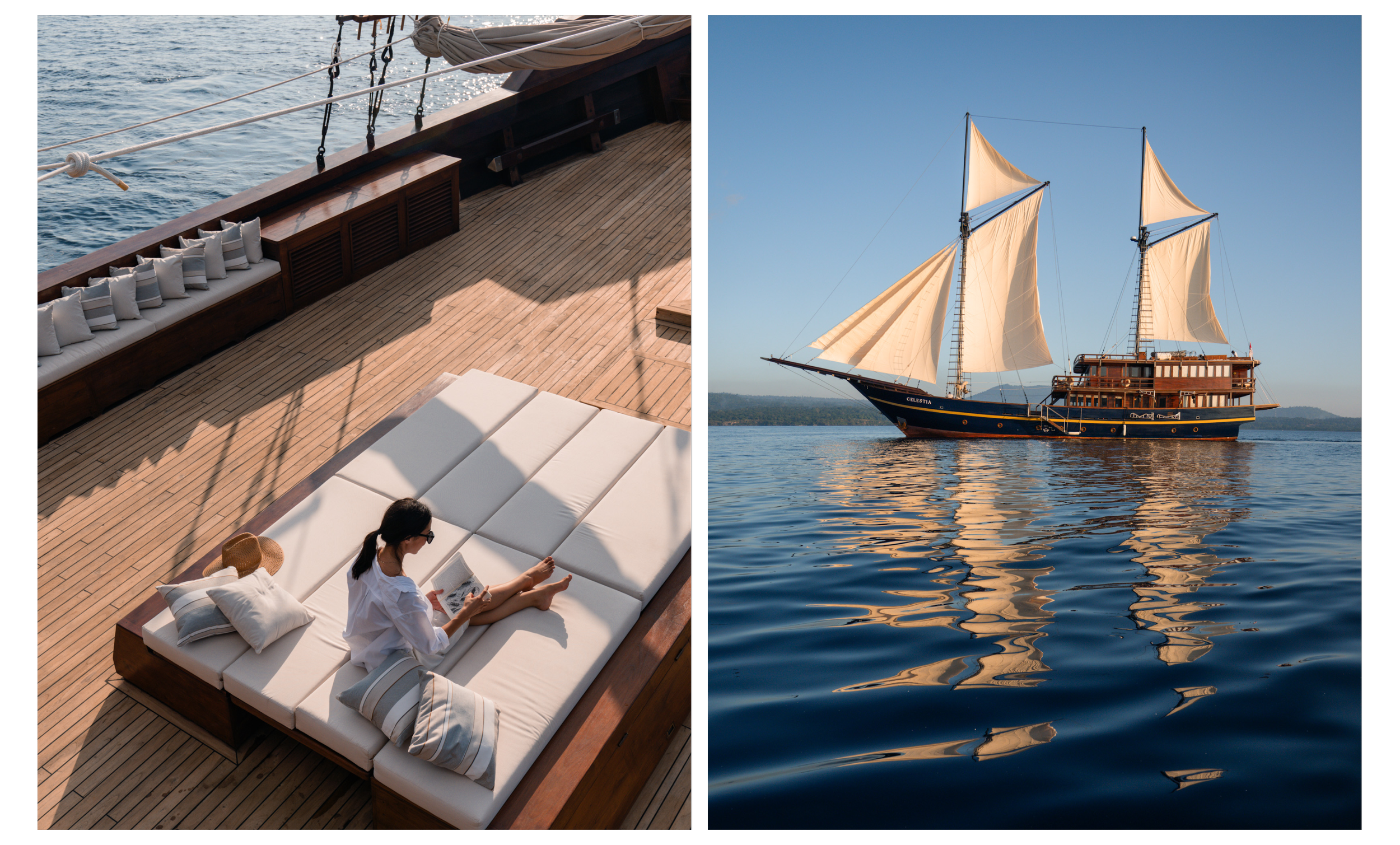
The landscapes shift constantly throughout the journey, islands, jagged peaks, sunlit horizons, but Celestia remains the steady place you return to. Because of that, it felt important that her materials reflect the environment around her: natural teak and ironwood, and Balinese glazed tiles in a soft duck egg blue, the same grey–tinted blue you see in the ocean’s horizon.
When luxury is distilled to something quieter and more personal, how does that intimacy shape the way guests experience the space AND EACH OTHER?
The nature of our voyages is that there are countless points of connection, between our crew and guests, between guests and the surrounding landscape, and of course among the guests themselves. Because the scale is intimate, those moments happen very naturally.
For me, that’s where luxury becomes something quieter and more personal.
“It’s not about spectacle, but about presence.”
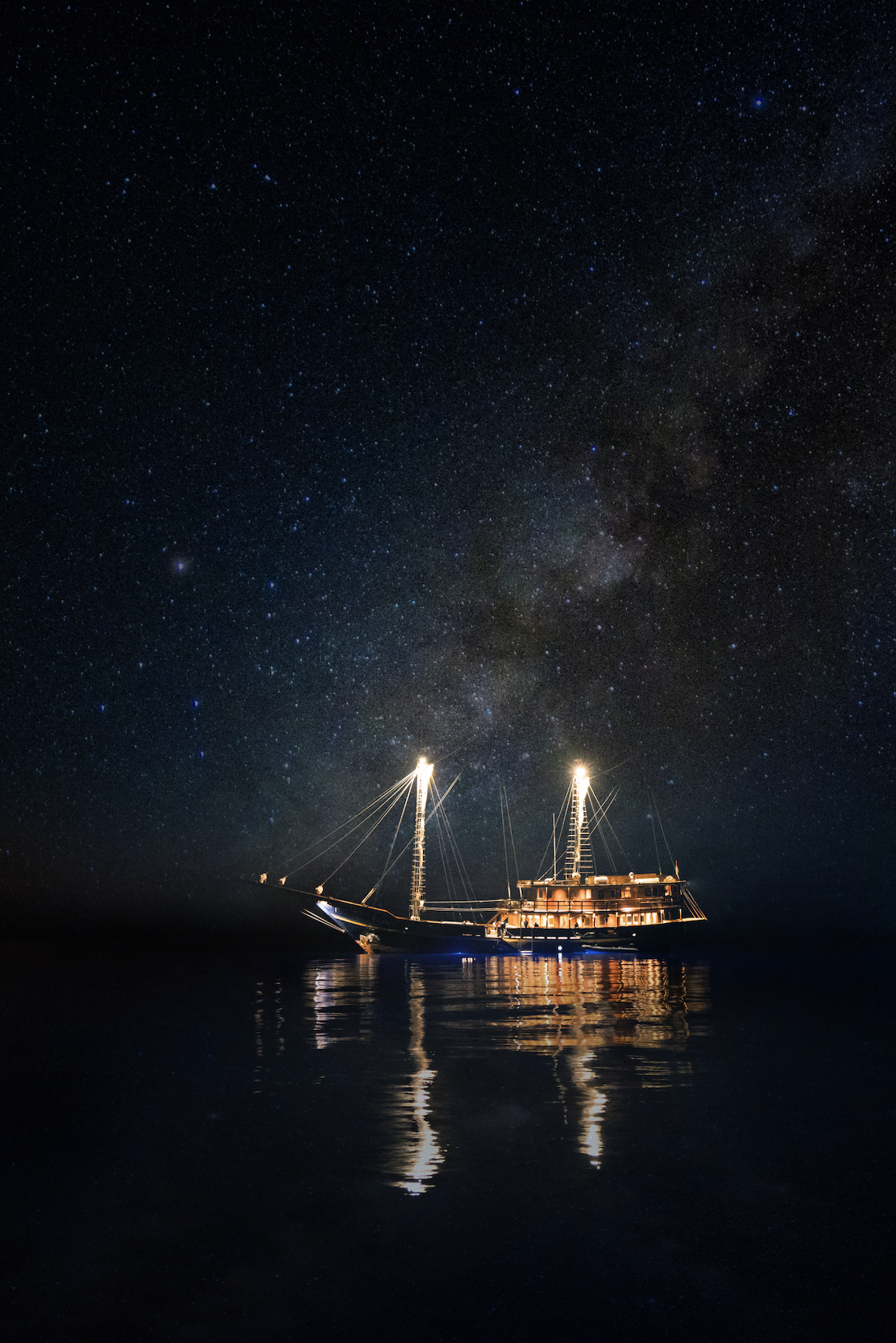
Sometimes it’s as simple as being one of the last three people awake at 1 a.m., stargazing on the bowsprit lounge, when suddenly a shooting star crosses the sky. That moment becomes a shared memory instantly.
I remember once my brother Jason and I were lingering at breakfast on the portside of the boat when a dolphin surfaced out of the water and seemed to meet us eye to eye before disappearing again. It wasn’t planned, but it’s a moment we both still remember vividly, and that kind of quiet, unexpected magic happens often on board.
How do you define stewardship when traveling through places? What does responsible presence look like to you?
For us, stewardship begins with respect for place and community. Being Indonesian–owned with an Indonesian crew from different regions of the country means we move through these landscapes with cultural understanding and sensitivity as we encounter local villages, fishermen, and communities along the way.
Rather than commercially made souvenirs, we work directly with women weavers in Flores to create custom hand-woven pieces for our guests, knowing that our consistent orders have a positive impact on their livelihoods.
Environmentally, we’re very conscious of the ocean that makes these journeys possible. We’ve developed reef–safe amenities to minimize our footprint, and through our partnership with Sungai Watch we’ve helped remove over 8,000 pounds of plastic and non-organic waste from Indonesian waterways.
“We want to enjoy the ocean, but also help ensure it remains healthy for generations to come.”
How do you and your brother think about gathering and conversation aboard Celestia? What kinds of connections do you hope are cultivated at sea?
There’s a closeness that naturally forms through shared moments and the many points of connection on board. Sometimes guests connect on being film camera enthusiasts, documenting moments from their voyage. Something as simple as asking, “Did you see that sunrise this morning?”
“being on Celestia invites you to notice and observe what’s around you.”
That attentiveness naturally leads to conversation and connection among guests. At the same time, the space at sea also allows for a quieter kind of reflection, moments where you can reconnect with yourself and see your interior world from a slightly different perspective.
How do you hope guests feel when they step aboard Celestia for the first time? And how do you hope they feel when they return to land?
When guests first step aboard, I hope they feel a sense of openness, that they can have the experience they want. Some people arrive ready for adventure, others simply wanting to rest and slow down. Often they surprise themselves along the way. We’ve had guests who didn’t swim at all, and after the first time snorkeling, begin asking about snorkel spots every day. Watching someone rediscover their relationship with the ocean like that is very powerful. When they return to land,
“I hope they feel rejuvenated, a little more in love with the natural world, and inspired by the beauty of it.”
Looking ahead, what excites you most about the future of Celestia? Are there dreams or evolutions still unfolding that you’re eager to explore?
I’m excited to continue doing what we’re doing and to keep learning from our guests as each voyage unfolds. It’s always fascinating to see what the experience at sea brings out in people. We’ve had guests write poetry and work on books while on board, I’ve designed collections for my own fashion line inspired by time on Celestia.
I’m also open to whatever else the universe may bring our way. I believe in divine timing, that things unfold in the right moment and in the right order, so I’m curious to see what the future holds for us in hospitality.
© All Photos by Celestia Yacht