
Caralarga México
Thread, texture, light, and movement all play a role in the world of Caralarga México.
Based in Querétaro, the textile design studio has built a distinctive practice around transforming natural fibers and reclaimed materials into sculptural works that blur the lines between art, design, and architecture. Guided by a commitment to sustainability and community, their work celebrates the beauty of raw materials while honoring the traditions and craftsmanship that shape contemporary Mexican design.
In this edition of Cultivating Conversations, the team shares how a chance encounter with discarded cotton thread sparked the beginnings of Caralarga, the collaborative process behind their evolving visual language, and the role craftsmanship plays in creating meaningful connections between people and place. From large scale hospitality installations, including the lobby chandelier at Park Hyatt Cabo del Sol*, to their vision for a more circular future, they reflect on the power of design to tell stories, preserve heritage, and inspire a sense of wonder.
*A Persephone Social client!
Can you tell us about the origins of Caralarga?
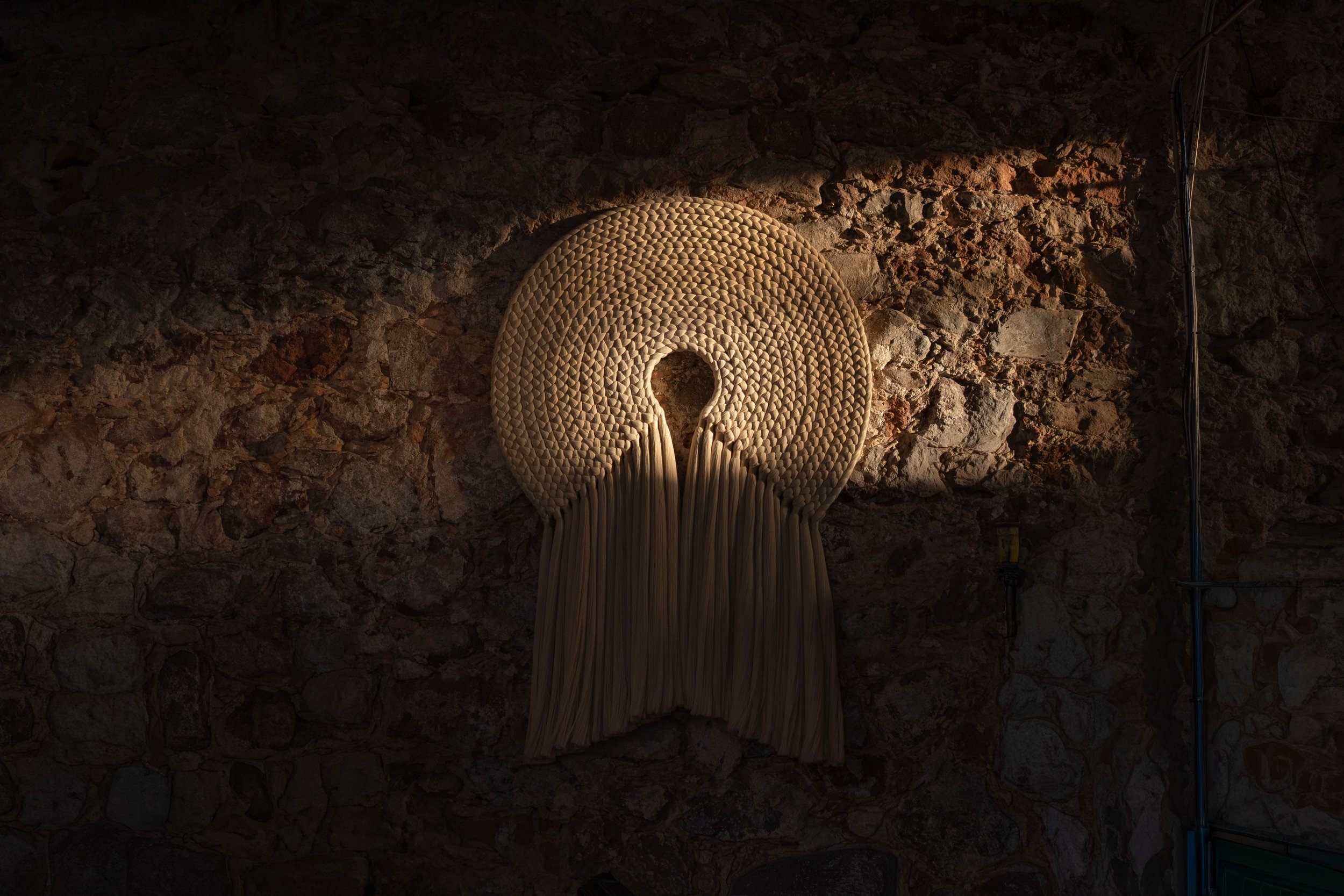
We are a Mexican textile design studio based in the historic neighborhood of Hércules in Querétaro. Caralarga was founded in 2014 by Ana Holschneider, who partnered with the master talent of Socorro Gasca to transform raw textiles into unique jewelry. Over time, as our pieces evolved into large-format interior design and architecture installations, Ariadna García joined as Managing Director. Today, under Ana’s creative vision and Ariadna’s leadership, we operate as an organic, growing family of nearly 50 people—including artisans, designers, and creative professionals.
“WE ARE all driven by a shared passion for sustainable, high-quality craftsmanship.”
We were born out of a profound encounter with material. While exploring the emblematic “El Hércules” textile factory, Ana stumbled upon remnants of raw, un–dyed cotton thread. Seeing the intrinsic beauty, texture, and honesty of this discarded material inspired the definitive vision for our brand: to highlight the natural beauty of raw fibers and preserve their essence through contemporary textile design.
“We envisioned a brand that could celebrate Mexican traditions while maintaining a clean, minimalist aesthetic.”
How did you develop your distinctive visual language?
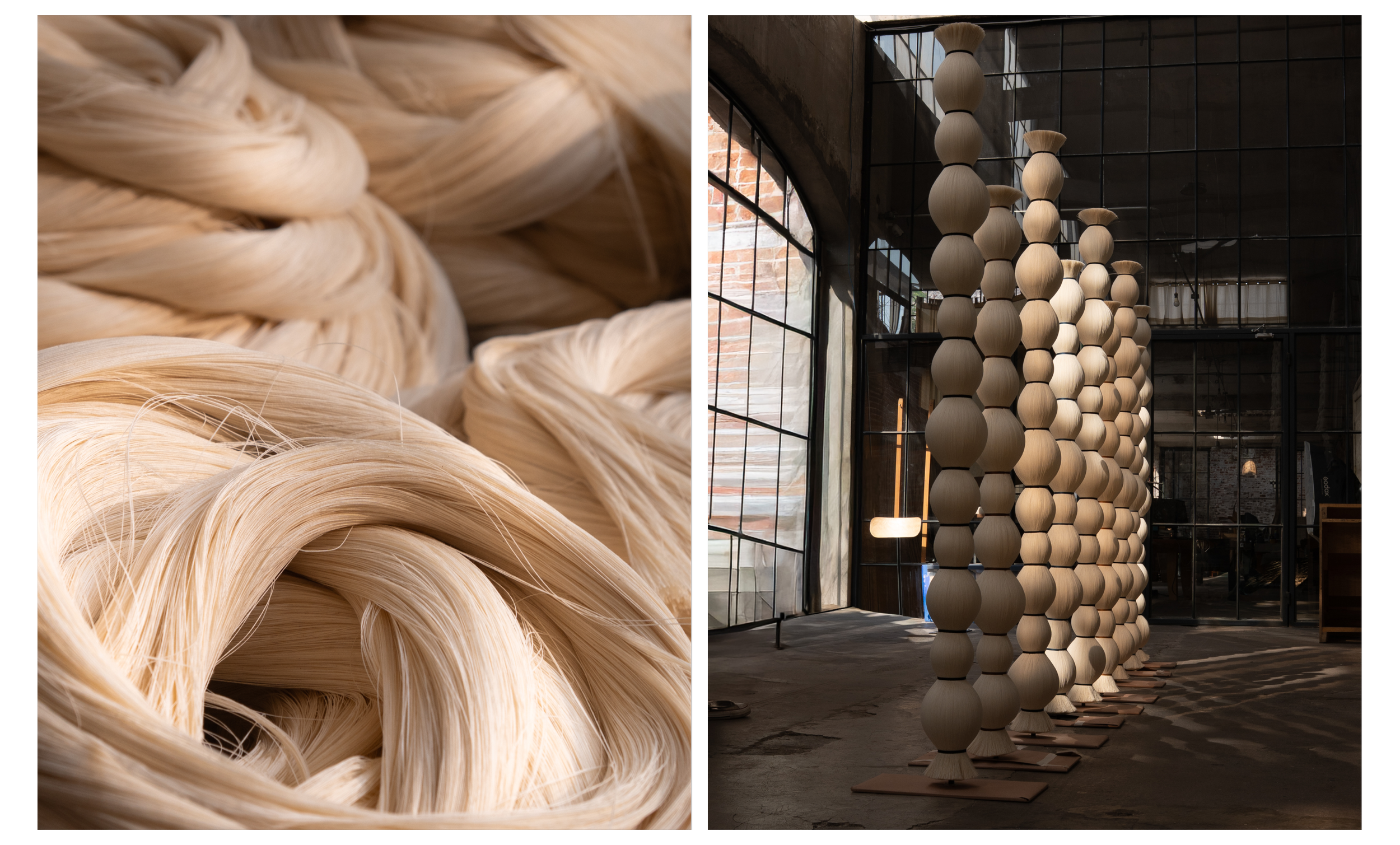
Our visual language has been developed through a collective, ongoing process of trial and error.
“From the beginning, we focused on experimentation.”
While some of our artisans had prior experience in knitting o stitching, most learned their craft from scratch right here in our workshop. Over the years, this creative evolution allowed us to consolidate a proprietary vocabulary of techniques, such as Recuperado (Recovered), Borlas (Tassels), Mixta (Mixed), Embarrilado (Winding), Trenzado (Braiding), Cordón (Cord), and Festones (Festoons).
What continues to draw you to textiles as a medium for storytelling and expression?
“Social media opened up our worlds. It made people and brands accessible.”
A finished Caralarga piece is just a small token of a much longer, shared journey. The versatility of thread allows us to communicate things other mediums cannot; it holds the physical imprint of the hands that made it. For us, a single thread can be woven, wound, or braided to tell stories of community, preservation, and natural heritage, connecting the ancient past with modern spaces. By sharing our work today, we also honor the textile history of our workshop's home and main inspiration, the former “El Hércules” textile factory.
Many of your pieces feel connected to nature, light, and movement. What influences most often find their way into your creative process?
“Our greatest muse is the architecture of nature itself.”
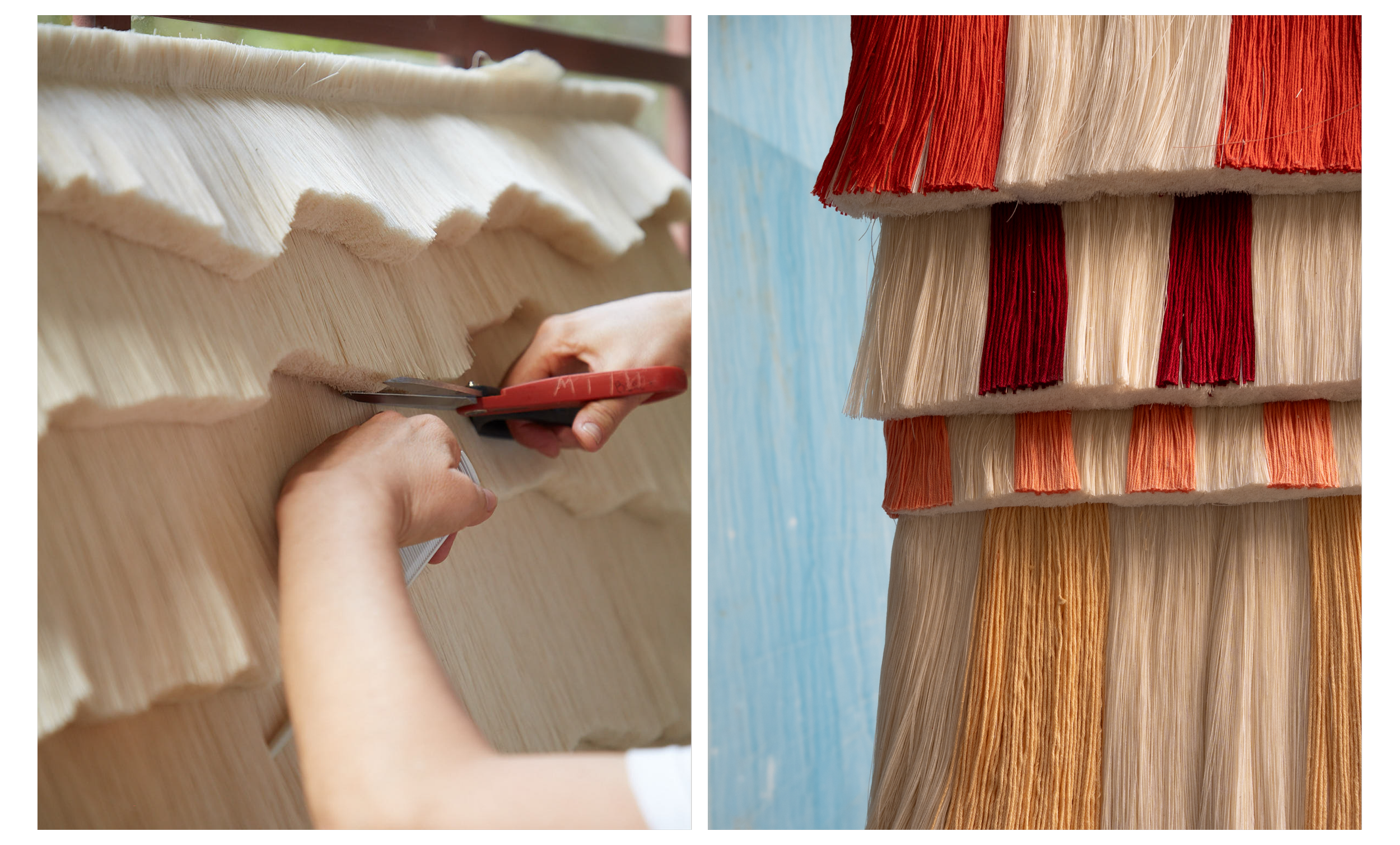
We are also deeply influenced by pre–Hispanic myths, legends, and the vibrant cultural expressions of México. We aim to capture these vast, complex cultural narratives and distill them into clean, organic forms, inviting viewers to bring their own interpretations to the movement of the fibers and the way they interact with light.
How do you balance honoring traditional techniques while continuing to innovate and evolve as a design studio?
The balance lies in our collaborative structure. Master artisan Socorro Gasca continues to produce and pass down her ancestral knowledge, training new generations of artisans within our workshop.
“We honor these traditional roots while innovating through scale, application, and sustainability.”
Innovation for us means constantly experimenting with eco–friendly processes—such as replacing polyester, styrofoam, or plastic with responsible alternatives—and pushing the boundaries of how textile art can integrate into modern interior architecture. Furthermore, the integration of a professional design team under our creative vision has brought incredible new developments and knowledge to our studio, creating a powerful synergy where traditional craftsmanship and contemporary design expertise elevate one another.
What do you look for in the materials you choose, and what can they communicate that other mediums cannot?
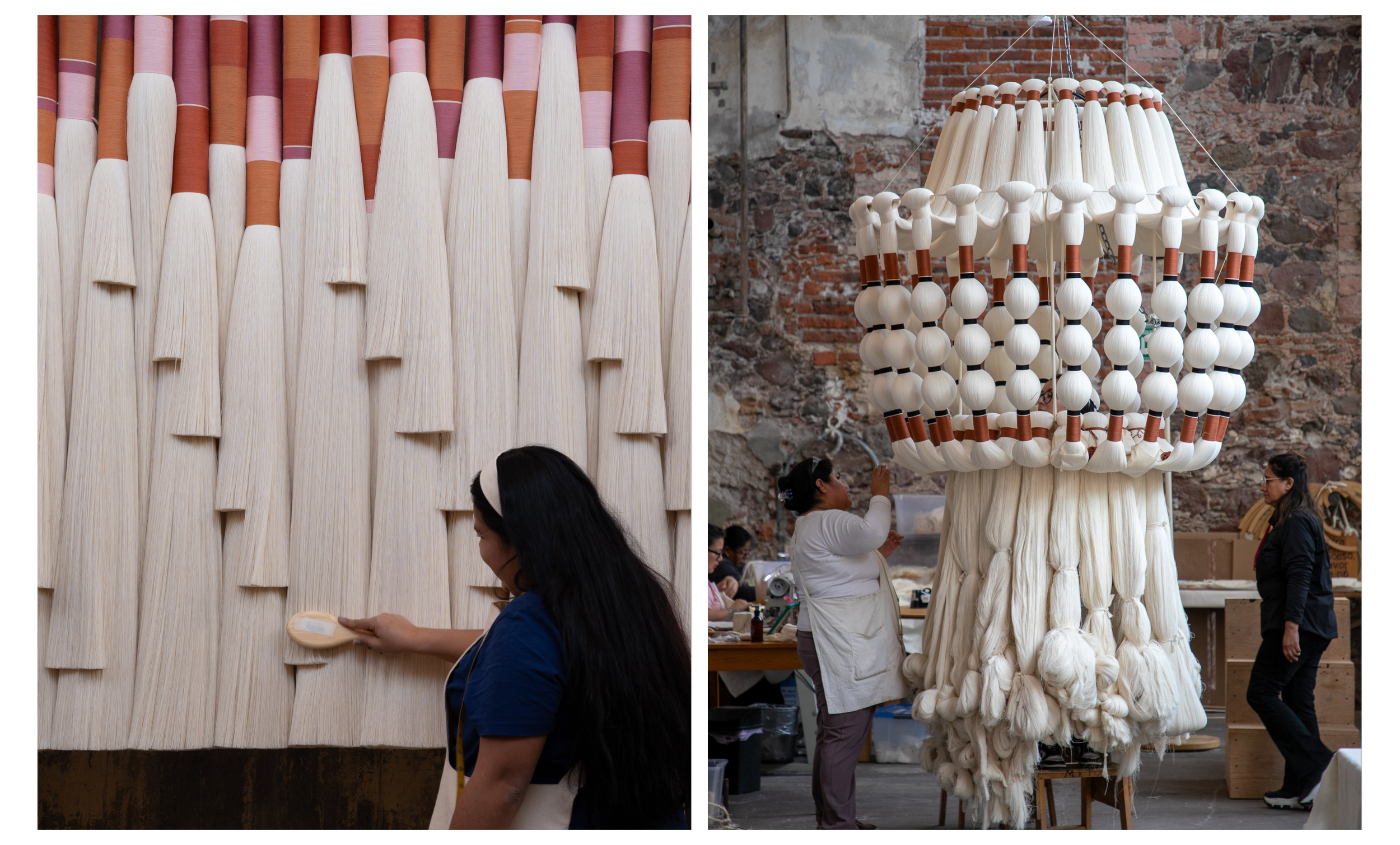
When selecting materials, we look for natural beauty, biodegradability, and a story of origin. Our primary materials are raw cotton thread and textile waste. We also work with sansevieria fiber and wool.
“These materials communicate honesty, timelessness, and a deep respect for the Earth.”
They possess a tactile vulnerability and a raw texture that synthetic materials can never replicate, signaling a conscious choice to live harmoniously with nature.
How has being based in Mexico shaped the way you think about design, craftsmanship, and community?
“Being based in Mexico completely defines who we are.”
Our identity is built entirely on social impact and community work. México’s rich craft heritage teaches us that design cannot be separated from the people who make it. We build close alliances with local workshops in Querétaro neighborhoods like Hércules, La Cañada, and Sombrerete—collaborating with specialists in sewing, weaving, carpentry, blacksmithing, and papercraft. Furthermore, we expand this network to other states, such as Yucatán, where we partner with Taller Maya to source sansevieria thread dyed with natural pigments. For us, craftsmanship is a source of pride, and our mission is to dignify and elevate it on a global stage.
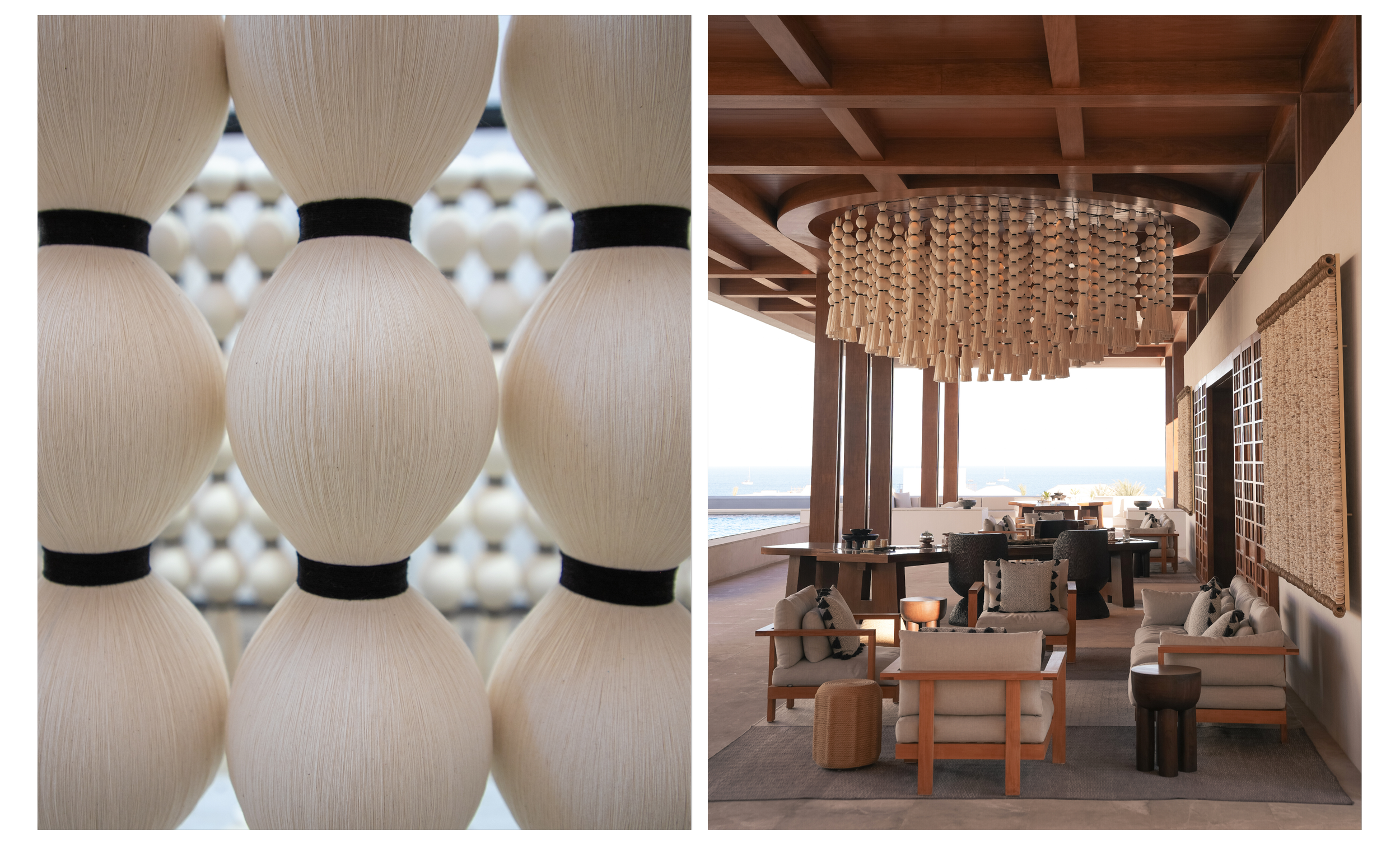
Caralarga's work often exists somewhere between art, design, and architecture. Do you see those disciplines as interconnected?
Absolutely. We see no boundaries between them. A piece may start as a design concept, but its execution requires structural engineering and architectural awareness, especially with our large–format installations. Ultimately, the emotional resonance and the stories woven into the fibers elevate the work into the realm of art. They all feed into one another to create holistic, soulful environments.
What have been some of the most meaningful lessons you've learned while building Caralarga?
“The most beautiful lesson is the power of community and human growth.”
Watching our team grow to nearly 50 people, and seeing artisans build a career from scratch, has been incredibly rewarding. We recently received the DC3 accreditation from the Ministry of Labor and Social Security (STPS) in México, which officially validates our team's labor competencies.
We’ve also learned the true value of circularity. Our Recuperado (Repurposed) technique taught us that nothing is waste if you approach it with creativity. Building on this, we have now introduced a dedicated upcycling area where we not only reuse our thread remnants to develop new components for our large-format installations, but we are also projecting this department toward producing its own independent line of utilitarian design pieces. It is incredibly exciting to continue pushing the boundaries of what we can reuse as we move closer to a zero–waste, or minimal-waste, production model.
How do you hope people feel when they encounter your work for the first time?
“We hope they feel a sense of wonder, serenity, and a deep connection to the natural world.”
Because our style is minimalist and simple, we want the viewer to feel invited to pause, touch, and interpret the piece through their own feelings, experiencing the peace that comes from the materials and designs.
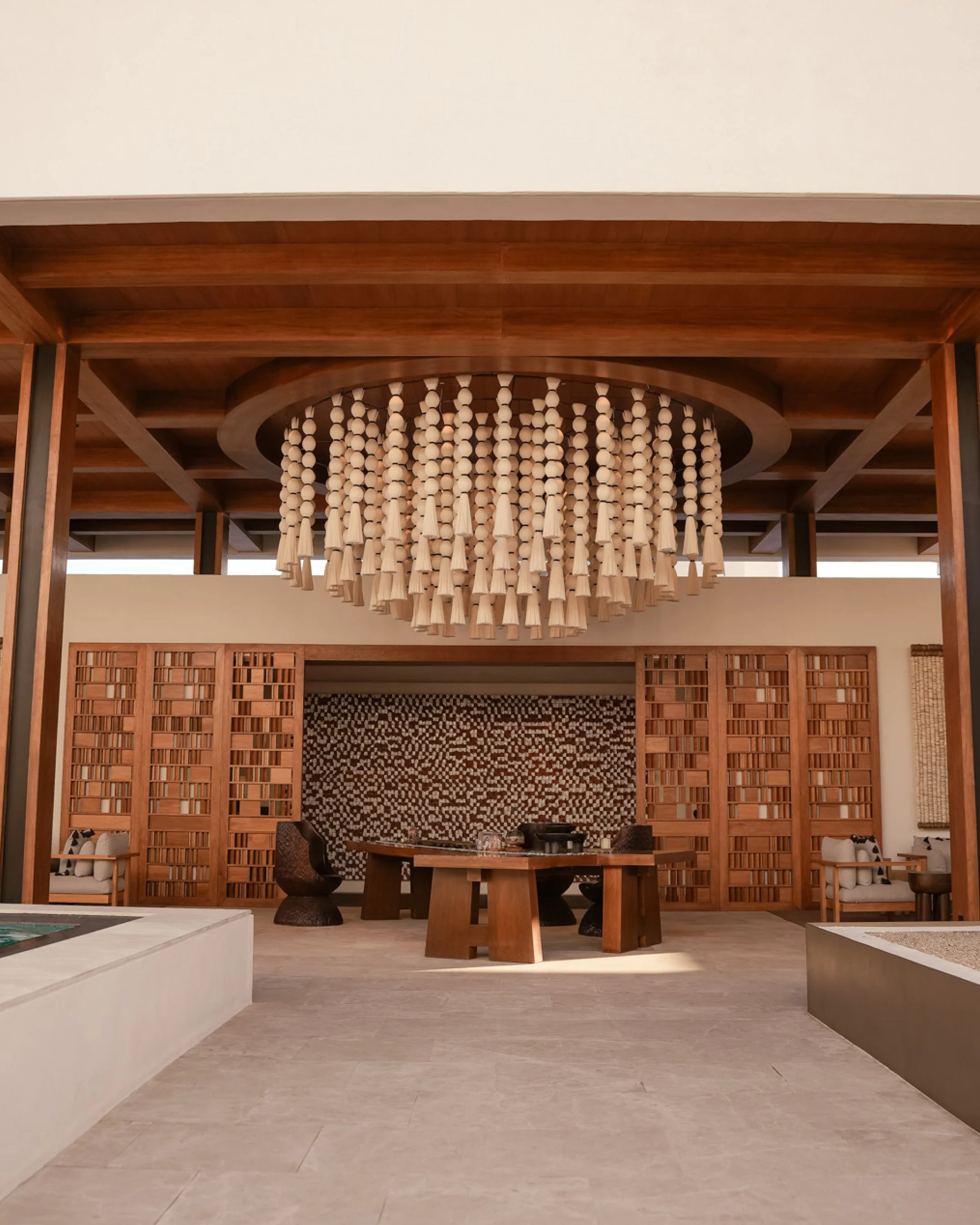
Hospitality has increasingly become a space for art and craftsmanship. What opportunities do you see when creative work is experienced within hotels?
“Hospitality spaces offer a magnificent, lived-in gallery for global travelers.”
When art and craftsmanship are integrated into public spaces, it gives the property a distinct soul and a sense of place. It moves art away from cold, detached exhibition walls and brings it into a space of comfort, interaction, and daily life, allowing guests to slow down and maybe feel the local culture and craftsmanship of the destination.
Caralarga created the striking centerpiece chandelier for Park Hyatt Cabo del Sol. how did the property's setting influence the final piece?
We were instantly drawn to the opportunity to collaborate on this beautiful project. It is truly inspiring to be considered to intervene in such an important area as the reception, a space that, with its authenticity, high–quality design, and elegance, reflects a quiet and genuine luxury.
“Framed by Baja's natural beauty and brilliant light, this chandelier is designed to offer an unforgettable welcome.”
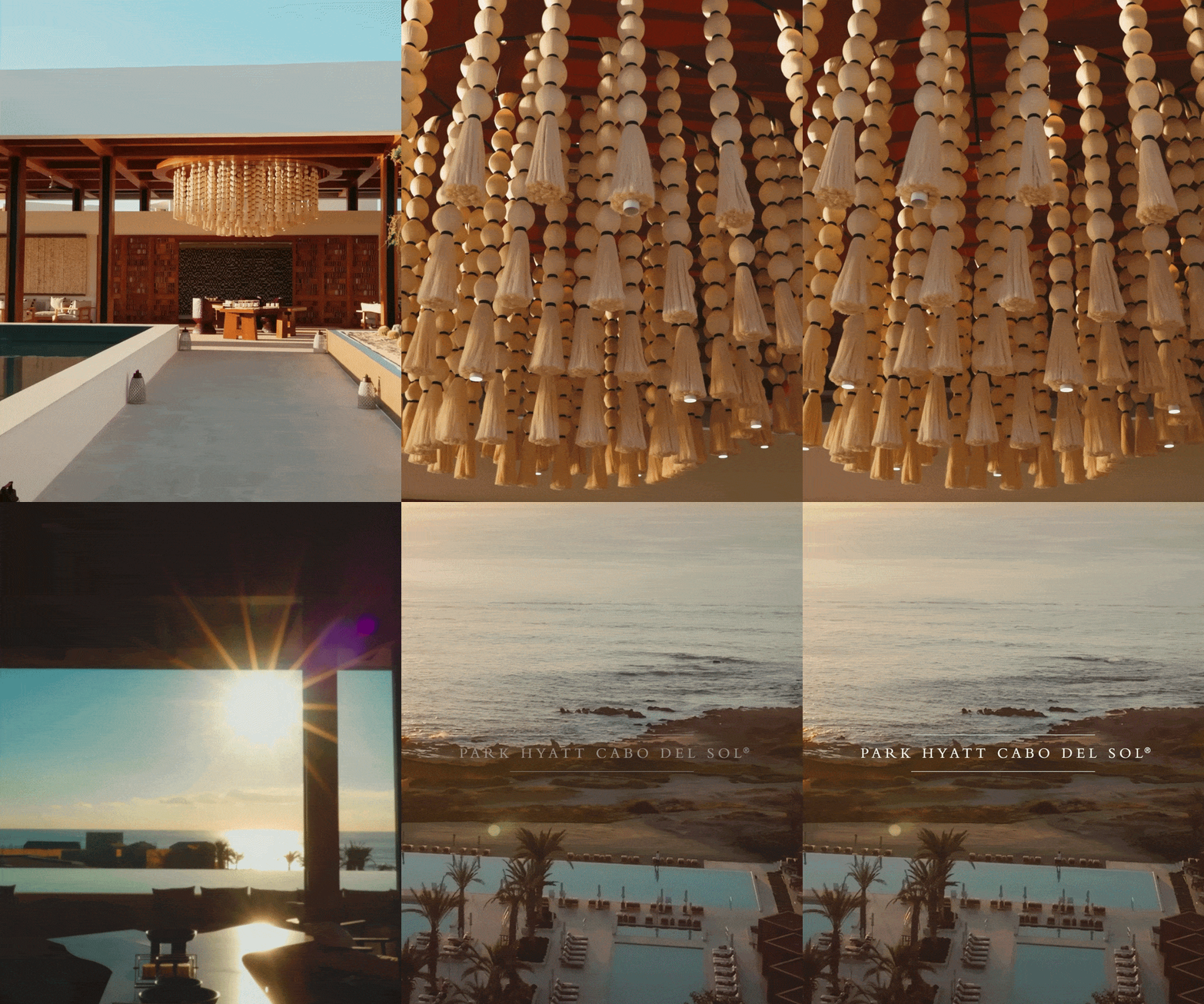
When designing for a hospitality environment such as Park Hyatt Cabo del Sol, how does your approach differ from creating a standalone installation or gallery work?
When designing for hospitality, we must think deeply about the dialogue between our pieces, the architecture, and the guest experience.
“A hospitality installation must harmonize with the scale of the public space, the lighting design, and the flow of human traffic.”
It requires rigorous collaboration with architects and interior designers to ensure the piece feels like an organic extension of the building itself, while remaining durable and timeless.
The chandelier welcomes guests at one of the first moments of arrival. What role do you think art and design play in shaping a guest's first impression of a place?
“The first moment of arrival sets the emotional tone for the entire stay.”
Art and design act as a visual welcome, instantly signaling to the guest that they have arrived somewhere unique, thoughtful, and deeply cared for. We think that a textile piece like this chandelier brings immediate warmth, replacing the institutional feel of a standard lobby with an atmosphere that feels artisanal, welcoming, and grounded.
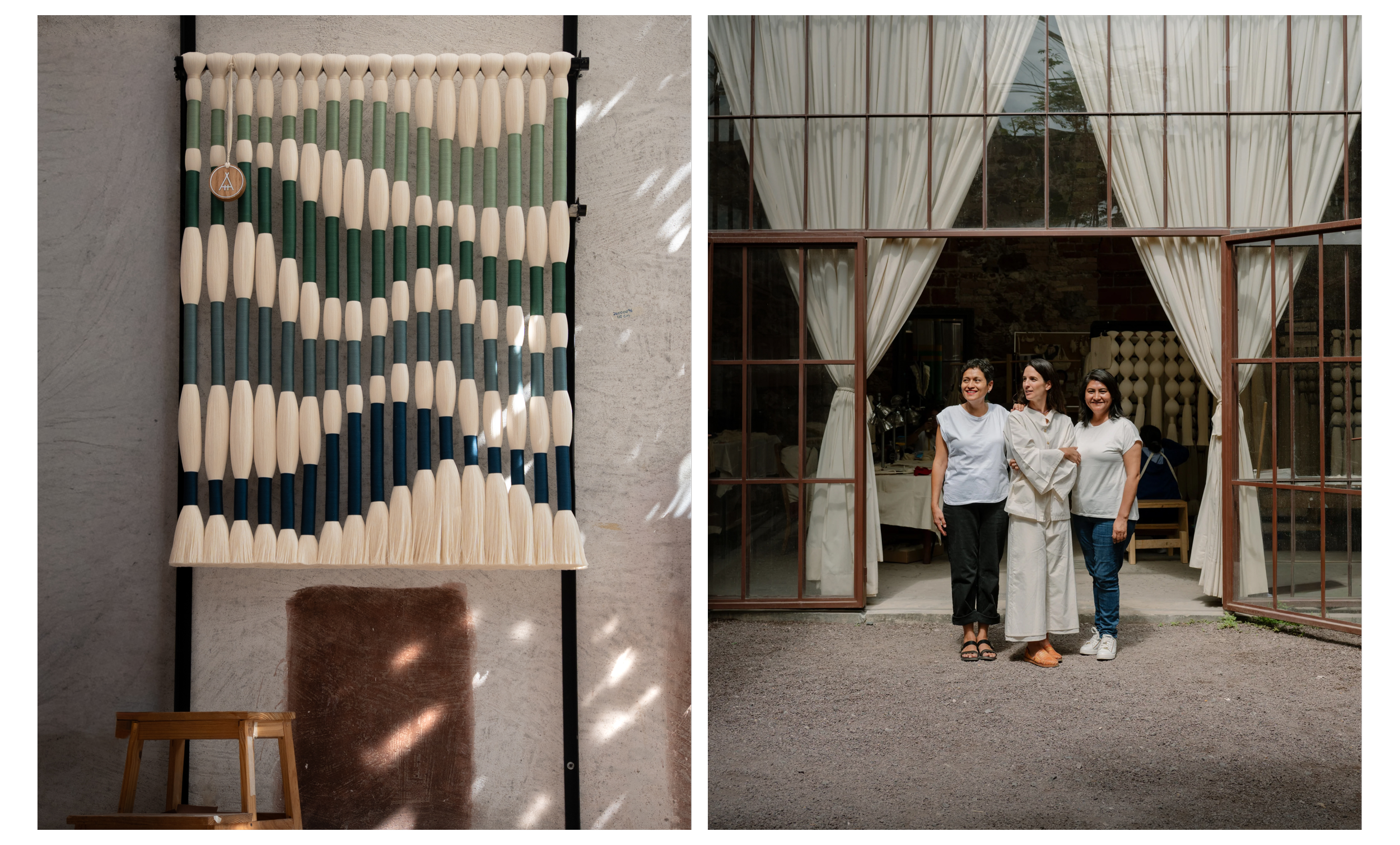
How do you think thoughtfully designed spaces influence the way people connect with a destination?
When a space honors regional materials and craftsmanship, it tells the story about the land and its people. Guests don’t just stay at a destination; they feel connected to its history, and its contemporary creative movement, leading to a much deeper, more respectful, and memorable travel experience.
What makes a collaboration feel successful when you're creating work for a hospitality setting?
It succeeds when the developers and designers trust our hands-on process. When the final installation seamlessly merges with the architecture, honors our sustainable principles, and celebrates the work of our team in this piece, including: designer manager Alejandro Alday; operations manager José Audi, who coordinates and executes the installation; artisans Nora, Margarita, Fabi López, Fabi Cruz, and Melissa; and our custom packaging team, María, Ezequiel, Francisco, and Jesús
“AND WHEN guests LEAVE inspired, we know we have achieved something beautiful.
Looking ahead, what ideas, projects, or areas of exploration are inspiring you most right now?
Right now, we are deeply inspired by further expanding our circular practices and exploring new materials. We want to dive deeper into collaborations with craftspeople, designers, architects, material engineers, and, of course, our own in–house team. Our mission remains clear: to continue creating with passion and awareness for the world, proving that contemporary design and social responsibility can beautifully coexist for a long time to come.
© All Photos by Caralarga México