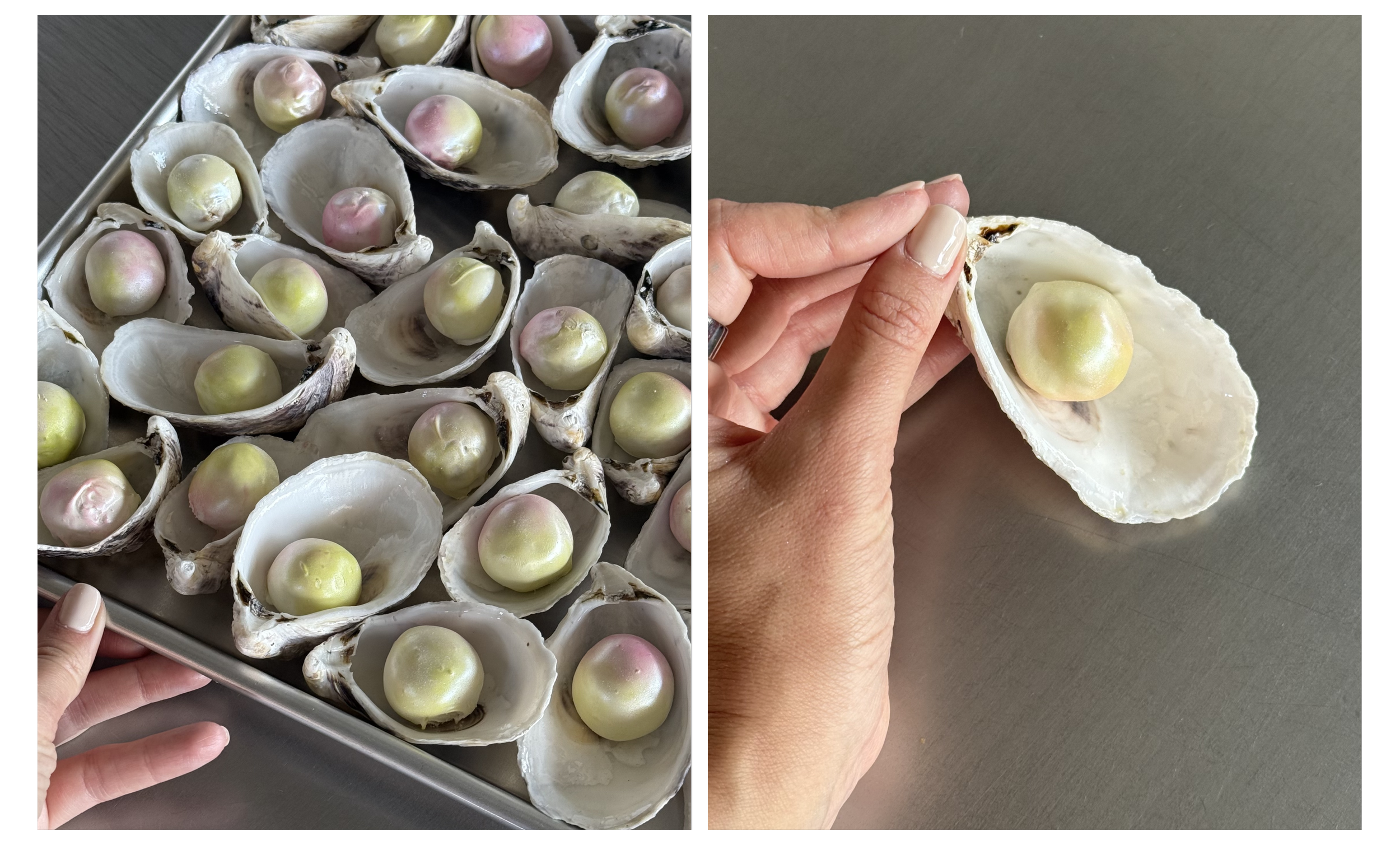
María Amaría
In this edition of Cultivating Conversations, we speak with María Andreina, founder of Cake Studio María Amaría, a Venezuelan–Mexican cake artist whose work explores the intersection of food, design, and memory.
Raised in Caracas and shaped by cities including Paris, Mexico City, Madrid, and New York, María’s path began outside the kitchen before evolving into a practice rooted in intuition and craft.
María reflects on impermanence, the influence of place, and the balance between form and flavor, creating work that feels both expressive and deeply considered.
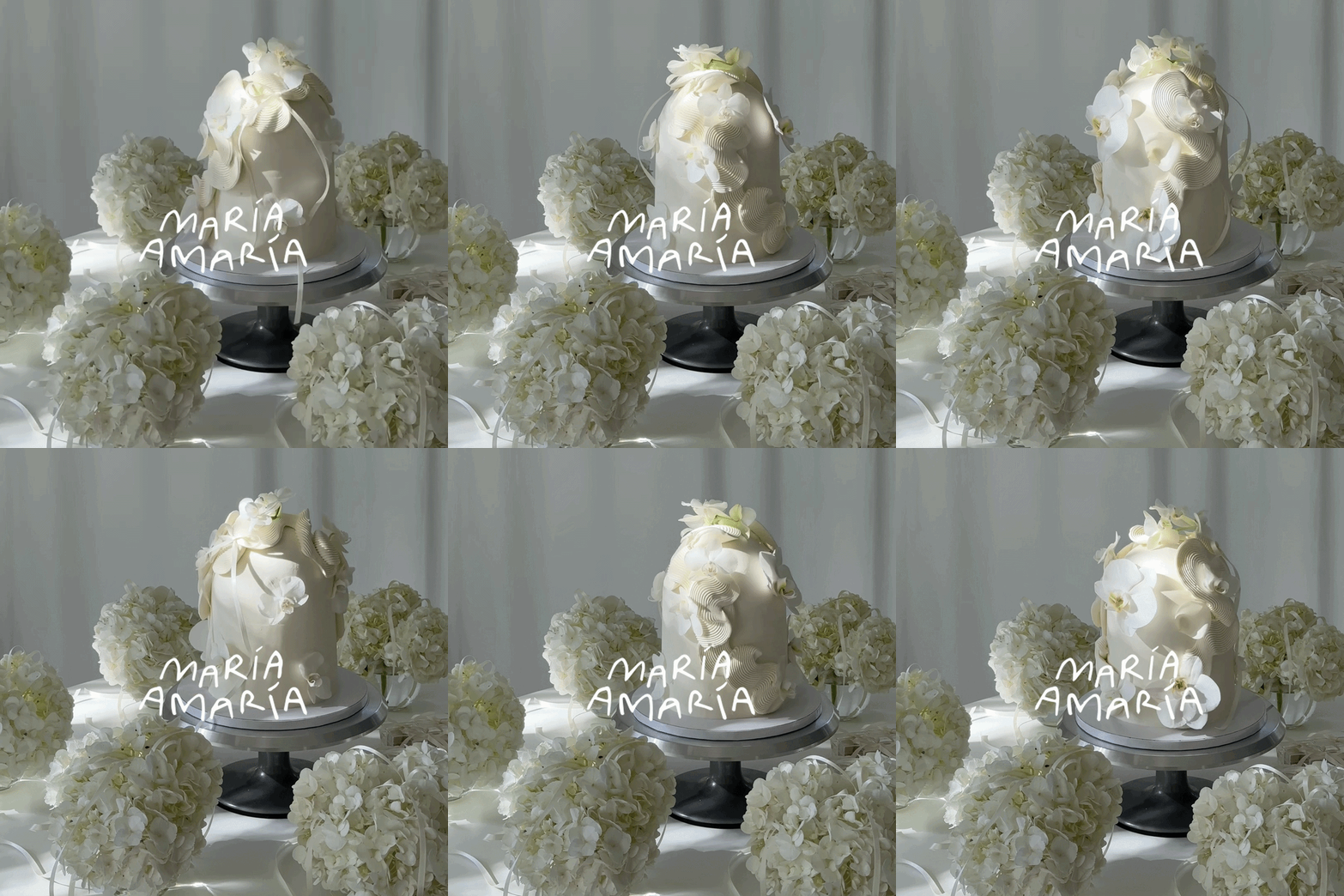
can you tell us a little bit about yourself?
Yes!!! Of course!!!
I’m María Andreina — half Venezuelan, half Mexican. I was raised in Caracas until I was 14, and due to the country’s situation, we left our hometown and have since had the opportunity to live in other inspiring cities like Paris, Miami, Mexico City, and Madrid.
I studied Psychology with a minor in French Language and Culture (nothing to do with cakes, I know!), and actually spent most of my professional years working at an energy company. But eventually,
“I felt this strong pull toward building a life driven by passion.”
One where I could create with my hands and express myself more freely.
It just so happens that I found the sweetest path to that end… making cakes! It has become my greatest joy, a way to express myself while giving purpose and meaning to my life. Following this path feels intuitive, and I love the connection it gives me to my creativity.
What’s your earliest memory of baking, and when did you realize it was something you wanted to pursue?
My earliest memories are in the kitchen at home with my mother and grandmother. They had this super easy pound cake recipe — simple ingredients, easy measurements — you’d just throw everything in the blender, pulse, and bake. It was the most delicious pound cake. So sad that they never wrote down the recipe!! And now my grandma, at 92, can’t remember it anymore…
I didn’t immediately think, “this will be my career.” My mom always baked for her friends’ parties, but she never saw it as a real job.
“That realization came later, when I saw how people reacted to my cakes.”
The emotion, the fascination, the way they became part of a memory. That’s when I understood it was bigger than just a hobby, it was a real opportunity I had in my hands!
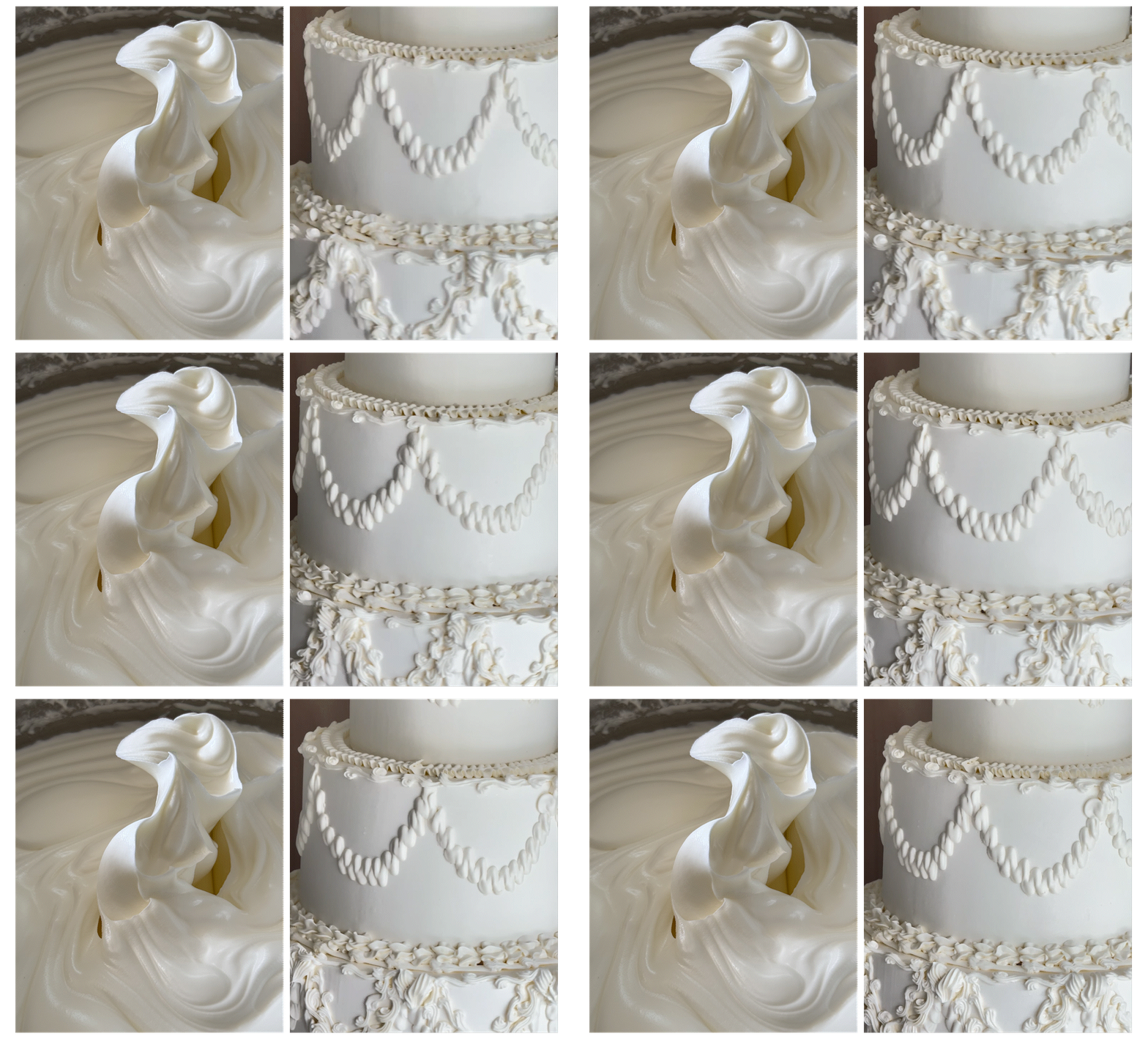
How has moving between cities like Mexico City, Madrid, and New York shaped the way you think about food and design?
Each city shaped me differently, and I think it also reflected the stage I was at personally while exploring each place. Mexico City definitely opened my eyes to the world of food, ingredients, and celebration culture. But it was in Madrid where I really started this project — I spent two years in my little kitchen practicing recipes and photographing the process. Madrid taught me patience and dedication. New York City and Miami opened the doors to creativity and pushed me conceptually, making me think bigger, bolder, and a bit more editorial.
Even if it sounds cliché I’ve come to really understand that,
“food is an international language, and design is how we interpret it.”
You often work with seasonal flowers and natural textures. how do you translate them into something edible?
I’m drawn to things that feel alive and have an essence, and for that, nothing is better than nature — seasonal flowers, fruit, textures that aren’t perfect. There’s something very honest about working with what’s available.
“I find the imperfections of nature fascinating.”
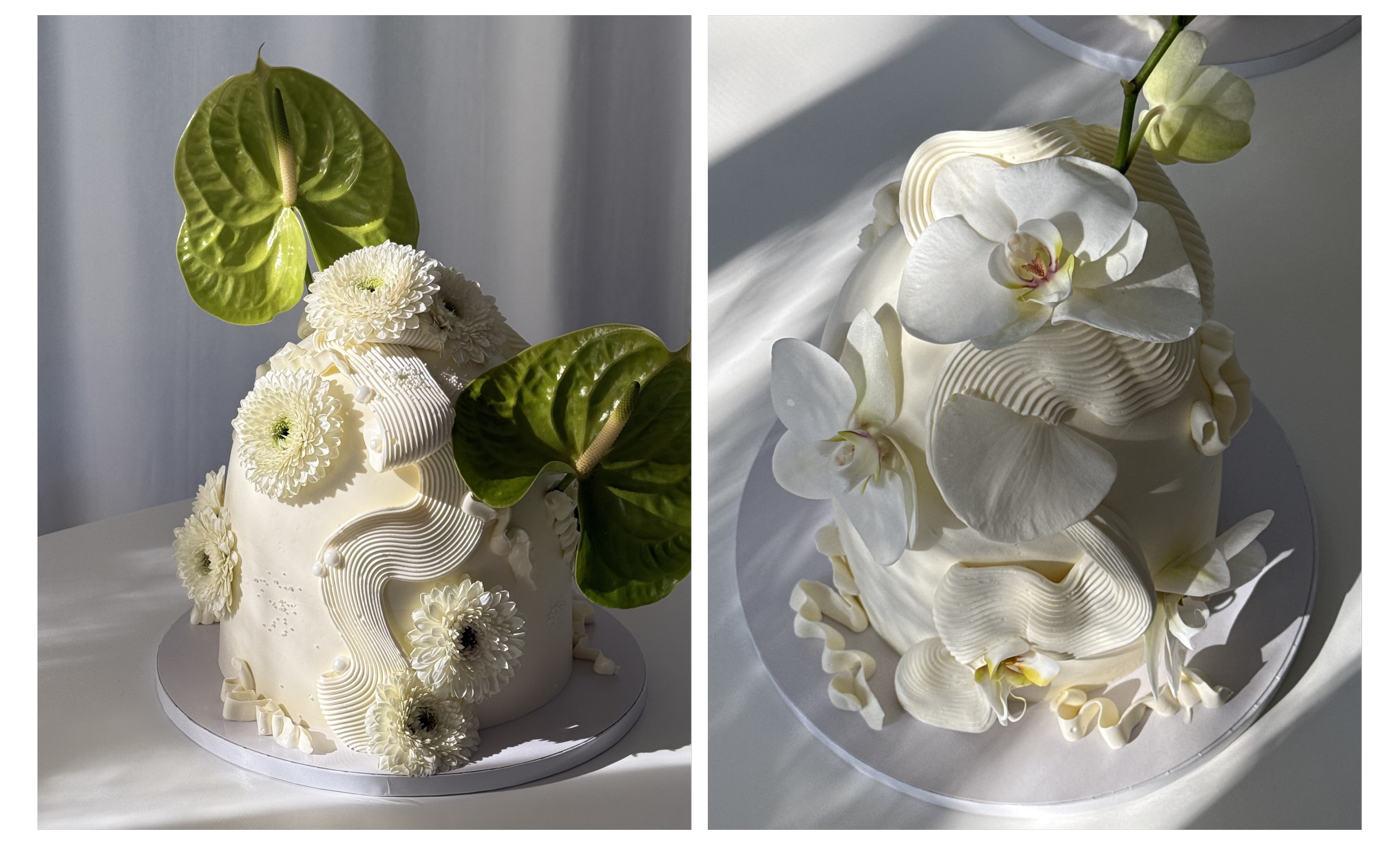
And rather than trying to exactly replicate them in something edible (which would be almost impossible), I incorporate them into my work — with petals, buttercream, flowers, delicious fruit fillings…
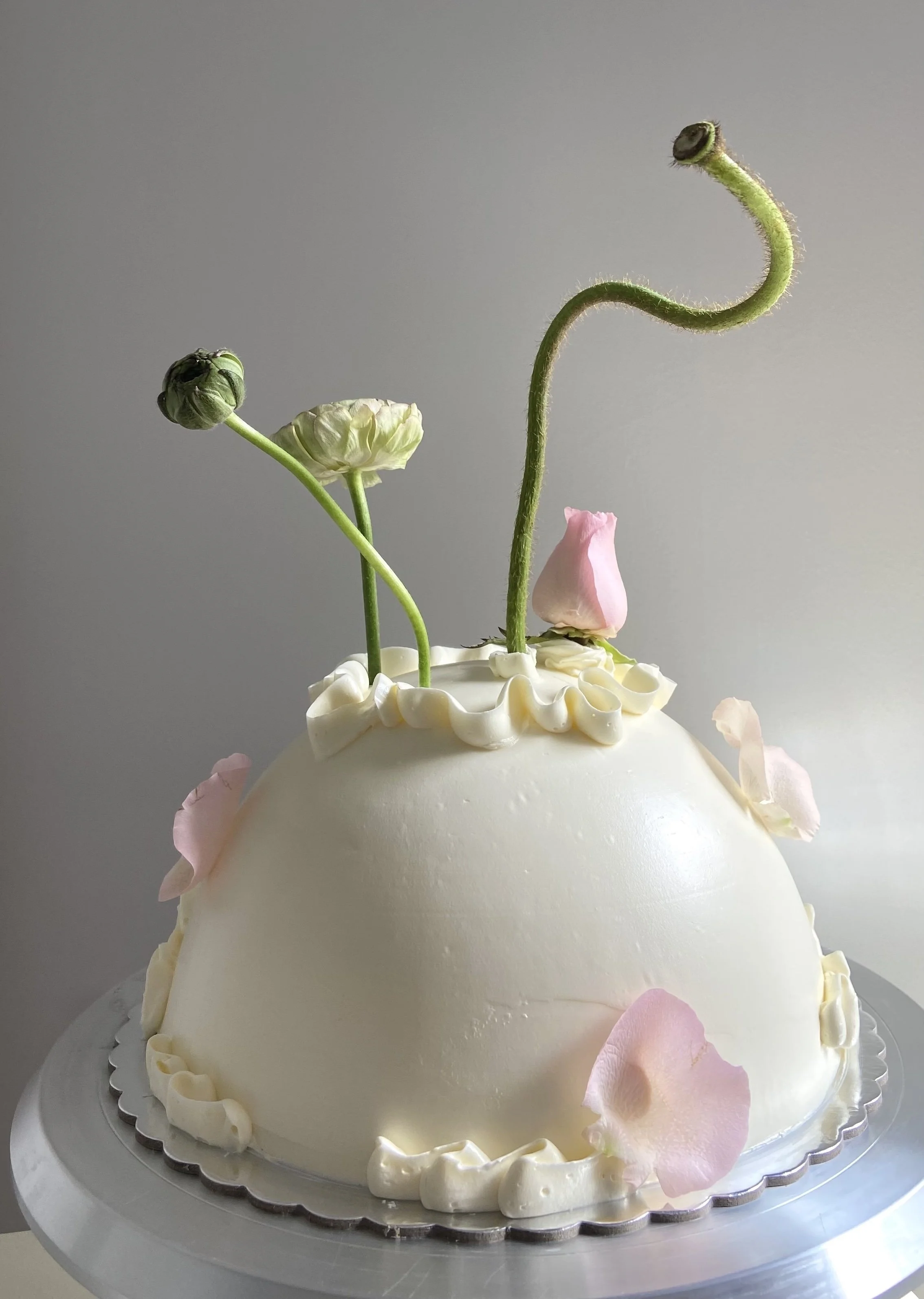
Some of your cakes feel like installations, pieces that should be admired before they’re even tasted. How do you balance form and function in your work?
“I love when a cake makes people hesitate before cutting it — that pause is so powerful!”
I also love when they’re unsure how to slice it, or even wish they could leave it untouched as decoration.
But flavor always comes first. If it’s beautiful and doesn’t taste incredible, it fails. So I design visually, but I build structurally and technically to make sure it slices well, travels well, and actually satisfies.
Do you think of your cakes as ephemeral art?
Well, they’re meant to disappear… so technically, yes.
At first, that felt scary — so much work for something that lasts just a few hours. But now I see it as part of the magic. The fact that it’s temporary makes it intimate.
“It lives on in memory, in photos, in taste.”
The creation process itself brings so much joy and anticipation, for both me and the client, as we watch it come to life. In the end, we have to accept that everything we love could vanish, and that’s what makes it all the more precious.
How do you approach sharing your process online while still preserving a sense of mystery?
It’s a balance — and honestly, I don’t think I’ve mastered it 100%! I love sharing because I genuinely get hypnotized during the process and want to capture and communicate that. I’m a visual learner, so I think sharing behind-the-scenes is my way of inspiring others.
But I don’t share everything. I keep certain techniques and creative rituals just for me.
“A little mystery keeps the work special — both for me and for the audience.”
What’s your relationship to trends, both in food and in aesthetics? How do you navigate staying current without compromising your voice?
Such a good question!!! We often feel like we’re falling behind if we don’t jump on every trend, but I’ve learned through my project that it is more about observation. You can grow while still keeping your own voice and choosing which trends truly align with your vision.
I watch trends, but I don’t believe every trend is for everyone. Some can pass by, and it won’t be the end of the world.
“It’s far more valuable to be recognized for a genuine essence and authentic voice.”
Sustainability can be tricky in a field that’s about spectacle and celebration. What are some of the ways you think about waste, sourcing, or longevity?
I try to work with seasonal and local ingredients whenever possible. I design dessert tables with intention so we don’t massively overproduce. I recycle display materials… I love when elements can be repurposed.
From cakes to full dessert tables, styling, and pop-ups, how do you think about creating a full sensory experience?
I think in layers. Flavor and dessert types are the foundation, texture is another, and visual rhythm, height, and color add even more. Every detail matters.
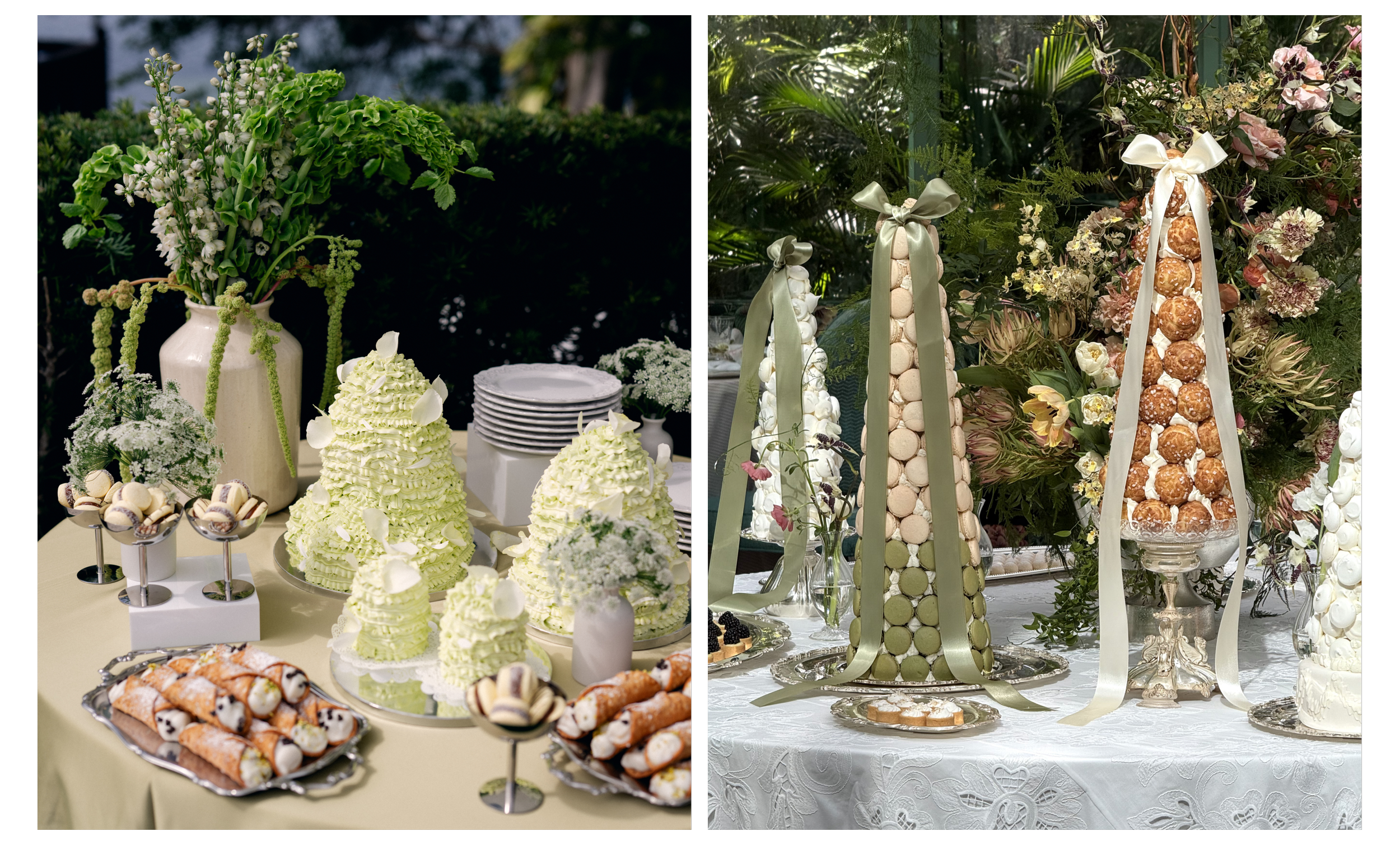
“A dessert table should feel like an environment.”
I want guests to approach it and feel something before they even taste anything. I love creating tables that tell a story, reflect the couple or occasion, and blend seamlessly with the overall event.
What does collaboration look like for you, whether it's with clients, florists, or other creatives?
Honestly, in the early days of my baking career, I often used collaborations as a way to gain exposure. Nowadays, we reserve these opportunities for smaller projects where it’s truly beneficial for both parties.
With clients, I try to understand who they are beyond the event. With florists and other creatives, it’s about respecting each other’s expertise and building something cohesive. I love creating without pressure, having “brainstorming sessions” where we can both express ideas freely and let the final results emerge without expectations.
Is there anything you’re dreaming of making right now that you haven’t had the chance to yet?
“I’m always dreaming of destination weddings in unexpected places — somewhere raw and natural!”
I also love the challenge of logistics, going to places where sometimes there isn’t even water or electricity, and we need to provide everything ourselves.
There are also some amazing vintage wedding cakes that clients send me from their grandparents, which I don’t even know how to make yet but would love to try!
I’d also love to learn from Isabella Suplicy, a luxury baker based in São Paulo… I even tried sending her an essay explaining why I’d love to intern with her! Ahahah — no answer yet.
And I’d love to explore a formal baking program at Ferrandi (or something similar). Everything I’ve learned so far has been self–taught, but right now my business demands 1000% of my attention. Hopefully, I’ll get the chance in the near future!
what do you hope people feel when they see or taste your work?
“I hope they feel moved, surprised, and satisfied.”
Even if it’s subtle — a sense of beauty, calm, nostalgia… I want them to feel like someone cared deeply about that moment. Because I do — I pour 100% of my heart into every project!